


There’s a funny thing about homes—we tend to notice what’s inside far more than what’s quietly working on the outside. Fresh paint, new furniture, maybe even a well-placed light fixture… those things get attention. But the parts of a house that actually protect it? They usually fade into the background.
Until they don’t.
Because when something goes wrong outside—when water seeps in, or a draft sneaks through, or a boundary starts to fall apart—it’s suddenly all you can think about.
When Water Finds Its Way In
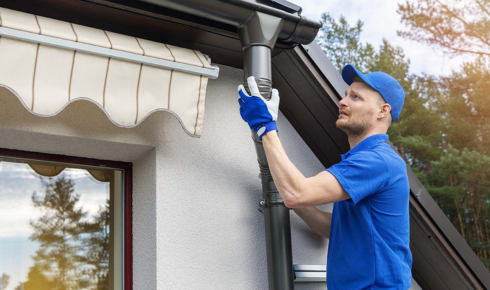
Let’s start with something most people rarely look at unless there’s a problem: gutters. They’re up there, doing their job silently, directing water away from your home. Out of sight, out of mind.
But when they clog, crack, or pull away from the roofline, things change fast. Rainwater starts spilling over instead of flowing through. It pools where it shouldn’t. Over time, that can mean damage to walls, foundations, even landscaping.
That’s why gutter repair isn’t just about fixing a broken section—it’s about protecting your home from a slow kind of damage that builds over months, sometimes years. And the tricky part? You often don’t notice it until it’s already made an impact.
Windows That Do More Than Let Light In
Windows seem simple. They open, they close, they let in light and air. But they also do a lot more than we give them credit for.
They keep out dust, noise, heat, cold… sometimes even unwanted moisture. So when a window starts to fail—maybe it doesn’t seal properly anymore, or there’s a small crack forming—it affects more than just the view.
A proper window repair can make a surprising difference. Rooms feel more comfortable. Energy bills might ease a little. And there’s that subtle feeling of security that comes from knowing everything is sealed the way it should be.
It’s one of those fixes you don’t realise you needed until it’s done.
The Boundaries That Define Your Space
Now step outside your front door. Look at the edges of your property—the fence, the gate, the line that separates your space from the rest of the world.
Fences aren’t just functional. They create a sense of boundary, of privacy. They frame your home in a way that’s easy to overlook but hard to ignore once it’s compromised.
A leaning post, a broken panel, a gate that doesn’t latch properly—it all adds up. And suddenly, your space feels a little less secure, a little less complete.
That’s where fence repair becomes more than a quick fix. It’s about restoring that sense of definition. Making sure your home feels like its own space again.
Small Issues, Bigger Impact
Here’s something that tends to get missed: these exterior problems rarely stay small. A minor gutter issue leads to water damage. A faulty window affects insulation. A broken fence invites more wear and tear.
It’s not dramatic at first. That’s the problem.
These issues work quietly, slowly building into something more serious. And by the time they demand attention, the fix isn’t as simple—or as affordable—as it could have been earlier.
The Balance Between Waiting and Acting
We all do it—put things off. It’s human. You notice a problem, make a mental note, and tell yourself you’ll deal with it later. When there’s time. When it becomes urgent.
But with home maintenance, waiting often costs more than acting early. Not always in money, but in effort, time, and sometimes stress.
Taking care of these things sooner rather than later keeps your home in that comfortable middle ground—where nothing feels neglected, and nothing demands immediate attention.
A Home That Feels Protected
There’s a certain peace that comes from knowing your home is looked after. Not just inside, but outside too. That the rain is going where it should, the windows are doing their job, and the boundaries are holding strong.
It’s not something you think about every day. But it shows up in how your home feels—stable, secure, quietly reliable.
And maybe that’s what it really comes down to.
It’s Not About Perfection
Maintaining a home isn’t about chasing perfection. Things will always wear down, break, or need attention. That’s just part of the process.
But staying ahead of those issues—handling them before they grow—makes all the difference. It keeps your home from feeling like a list of problems waiting to be solved.
Instead, it becomes something else entirely. A place that supports you, protects you, and continues to feel like home, even as time moves on.
Because in the end, it’s often the things we don’t see—the gutters, the windows, the fences—that do the most important work of all.