My cousin moved from Andheri to Powai last year, a distance you could technically cover in forty minutes on a good day. It took her eleven hours. The truck got stuck behind a water tanker, the society secretary wouldn’t let anyone in before 10 a.m., and somewhere in the middle of all that, her glass shelf cracked clean in half. She called me that night, half laughing, half in tears, and said, “Nobody warns you about this stuff.”
So consider this me warning you. Mumbai is a city that squeezes everything: space, time, patience. Moving inside it, or into it, takes a bit more thought than just booking a truck and hoping for the best.
Timing is half the battle
Let’s start with the boring-but-true part. Mumbai traffic doesn’t forgive. If your movers show up at noon, you’ve already lost a chunk of the day, because loading takes hours and then you hit the evening rush. Early morning slots are gold. Ask for a 7 or 8 a.m. start if the society allows it, and check the rules first, because plenty of buildings here have fixed windows for goods lifts and strict “no moving on Sundays” policies. Some want a no-objection letter. Some want a deposit. A few just want to make your life difficult, honestly.
Monsoon is its own category. From June to September, a move can turn into a wet, muddy scramble. Cartons soak through, upholstery gets damp, and the roads get unpredictable. If you can dodge those months, do. If you can’t, ask your movers how they waterproof, because tarpaulin over a sofa is not the same thing as proper plastic wrapping.
Finding people you can actually trust
There’s no shortage of options. Type Packers and Movers Mumbai into a search bar and you’ll get a wall of results, all promising “safe and secure” shifting at “lowest rates.” I stopped believing those phrases years ago. They mean nothing without proof.
What helped me, and what I’d pass on to you: ask for a home visit before you get a quote. A person walking through your flat, opening the wardrobes, tapping the fridge, asking about the lift, will give you a far more honest number than someone guessing over the phone. Then compare at least three. Not just the totals, but what’s inside them. Is packing material charged separately? Is there a fee for carrying things up stairs? What about unpacking?
And please, get it in writing. WhatsApp counts. Screenshots count. A verbal promise on a noisy phone call is worth about as much as a monsoon umbrella with a broken rib.
Reading between the lines of reviews
Reviews are useful, but you have to read them like a detective. Five stars with no detail? Skip it. A three-star review that says “crew was late by two hours but nothing broke and the bill matched” is actually pretty reassuring. Look for patterns. If five different people mention damaged furniture, that’s not bad luck, that’s a habit.
I’d also ask friends or colleagues. Real recommendations from someone who watched the whole thing unfold beat any website. When my neighbor mentioned that Agarwal Packers and Movers Mumbai had handled her Bandra to Thane shift without a single scratch on her piano, I noted it right away. That kind of specific, boring, nothing-went-wrong story is exactly what you want to hear. Still, I’d tell you what I told myself: verify it. Call them, ask for a survey, check the paperwork, and trust your gut on how they talk to you.
What to pack yourself
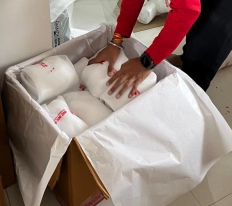
I’m of two minds here. Professional packing is genuinely better for heavy, fragile, or awkward stuff. Crockery, TVs, mirrors, the wardrobe you assembled with an Allen key and a lot of swearing. They use bubble wrap, corrugated sheets, corner guards, and they do it quickly.
But some things should stay with you. Documents, passports, cash, jewelry, medicines, laptops, chargers, the kids’ school stuff. Put them in a bag or two and carry them yourself. I once watched a friend spend an entire evening hunting for her property papers, which had been packed in a box marked “misc.” The truck had already left. Not fun.
Take photos of your big items before packing starts. Furniture, appliances, anything valuable. If something arrives damaged, you’ll have a clear before-and-after, and claims go a lot smoother with evidence.
Insurance and the fine print
This is the part everyone skips and then regrets. Ask what’s actually covered. Transit insurance is different from a vague “we’ll take care of it” promise. Find out how much cover applies, what the claim process looks like, and how long it takes. Some companies will happily insure a fridge for a tiny amount and call it done.
Also, think about what you’re moving. A decade of accumulated stuff is rarely all worth keeping. Before you pay anyone to carry it, sort ruthlessly. Donate the clothes you haven’t worn since 2019. Sell the old bookshelf. You’re paying by volume, effectively, so every box you cut saves a little money and a lot of effort.
Moving day, and the days after
Be present. Even if you’ve hired the most reliable crew in the city, someone needs to supervise, answer questions, and check things off a list. Keep water and snacks around, tip fairly if the team did well, and walk through every room one last time. Open every cupboard. Check the balcony, the loft, the space behind the door. People always leave something.
Then, once the last box lands in the new place, resist the urge to unpack everything at once. Make the bed. Find the kettle. Order dinner. The rest can wait.
Moving in Mumbai will test you, there’s no way around that. The city is crowded, the weather is moody, and the logistics are never as tidy as the brochure suggests. But a bit of planning, a few honest questions, and the right team make it manageable. Maybe even a little bit exciting, if you squint.
My cousin, by the way, replaced that glass shelf. She still talks about the day she moved. But now it’s a funny story rather than a nightmare, and that’s really the best outcome any of us can ask for.