

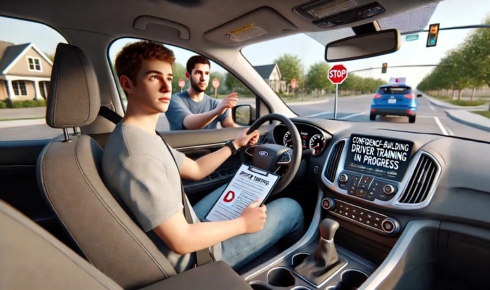

There’s a moment almost every new driver remembers. You sit in the parked car, hands stiff on the steering wheel, trying to look calmer than you actually feel. The instructor says something simple like, “Alright, ease forward when you’re ready,” and suddenly every mirror, pedal, and passing car feels ten times more important than before.
Learning to drive has a funny way of exposing nerves people didn’t even know they had.
Some learners pick things up quickly. Others need extra time before traffic starts feeling manageable. Most people, honestly, land somewhere in the messy middle — improving gradually while pretending they’re more confident than they really are.
And that’s perfectly normal.
Driving isn’t only about operating a vehicle. It’s about decision-making, awareness, patience, and learning how to stay calm when situations become unpredictable.
Why Good Instruction Matters So Much
A lot of people underestimate the role proper teaching plays in shaping safe drivers. They assume driving is just something you “figure out” after enough practice. But bad habits formed early can stick around for years.
Strong driver education helps learners understand more than just technical rules. It teaches people how to think while driving. How to anticipate risks. How to remain aware of what’s happening around them instead of zoning out behind the wheel.
That mental side of driving matters more than people realize.
For example, many accidents don’t happen because someone lacks steering skills. They happen because drivers become distracted, impatient, overly confident, or emotionally reactive. Good training addresses those human factors too.
And honestly, some of the best lessons aren’t even about driving mechanics. They’re about judgment.
Everyone Learns at a Different Pace
One of the worst things learners can do is compare themselves constantly to others.
Maybe your friend passed their test after five lessons. Maybe a sibling seemed naturally comfortable driving in heavy traffic almost immediately. That doesn’t mean your progress is “wrong” if it takes longer.
Driving combines coordination, focus, confidence, and situational awareness all at once. Different people adjust to that pressure differently.
Some learners benefit greatly from private driving lessons because the one-on-one environment reduces distractions and allows instruction to match their pace. In group settings, nervous students sometimes feel embarrassed asking questions or admitting confusion. Private sessions often remove that pressure entirely.
And sometimes that small difference changes everything.
A relaxed learner absorbs information faster than an anxious one almost every time.
The Emotional Side of Driving Rarely Gets Enough Attention
People talk about driving as though it’s purely technical, but emotions play a massive role behind the wheel.
Stress affects reaction time.
Fear causes hesitation.
Anger leads to reckless decisions.
Overconfidence creates unnecessary risks.
Even experienced drivers struggle emotionally sometimes — especially during traffic jams, bad weather, or aggressive encounters with other motorists.
That’s why emotional regulation quietly becomes one of the most important driving skills over time.
I’ve noticed the safest drivers are rarely the loudest or fastest ones. Usually, they’re calm people who don’t feel the need to “win” on the road. They let impatient drivers pass. They slow down during difficult conditions. They stay alert without becoming aggressive.
That mindset reflects true defensive driving more than any textbook definition ever could.
Mistakes Are Part of Becoming Better
Almost every learner believes small mistakes mean they’re failing. Stall the engine once and suddenly it feels like proof you’ll never become comfortable driving.
But mistakes are unavoidable during the learning process.
People miss turns.
Forget signals.
Brake too hard.
Park crooked.
Misjudge distances.
The important thing isn’t avoiding every error perfectly. It’s learning how to recover calmly and improve gradually.
Honestly, experienced drivers still make mistakes too. The difference is they’ve developed confidence in handling unexpected situations without panicking.
And that confidence only comes through practice.
Driving Builds Independence in Quiet Ways
There’s something deeply personal about becoming comfortable behind the wheel. A license represents more than transportation for most people.
It means freedom.
Flexibility.
Opportunity.
Suddenly, everyday things become easier — commuting to work, visiting family, running errands, taking spontaneous trips without depending on someone else’s schedule.
People often underestimate how emotionally significant that independence feels until they experience it themselves.
I remember talking to someone who said their proudest driving moment wasn’t passing the test. It was driving alone to buy groceries for the first time without feeling terrified the entire trip.
That sounds small on paper, but emotionally, it can feel huge.
Real Confidence Comes Later
Passing the road test doesn’t magically erase nervousness. In fact, many drivers feel more anxious after getting licensed because they no longer have an instructor sitting beside them.
Real confidence develops later through ordinary experiences:
Night driving.
Heavy rain.
Busy intersections.
Unexpected detours.
Long highway trips.
Those everyday situations quietly teach skills no classroom fully can.
Over time, driving starts feeling less overwhelming and more automatic. You stop consciously thinking about every mirror check or lane change. Your brain adjusts.
And eventually, something shifts almost without notice.
You stop feeling like “someone learning to drive.”
You simply feel like a driver.
Final Thoughts
Learning to drive is rarely smooth or perfectly organized. There are awkward moments, frustrating lessons, and days where progress feels painfully slow. But that’s part of the process for almost everyone.
The important thing is consistency, patience, and good guidance.
Driving isn’t about impressing people with confidence or speed. It’s about awareness, responsibility, and learning how to handle the road thoughtfully.
And honestly, the people who approach driving with humility and patience often become the safest drivers in the long run.